Before the first kitchen timer goes off, international trade duties have already driven up the cost of your holiday dinner. Between a historic shortage in American cattle herds raising beef prices sky-high, tariffs on tinplate steel inflating the price of canned goods, and foreign trade duties hitting European cheeses, wines, and sweets, hosting a holiday meal in 2026 can feel like walking a tightrope. I’ve been seeing these price hikes firsthand while shopping, and it’s definitely made me rethink a few of my usual grocery picks.
And while we can’t control international trade policies, we can outsmart them at the grocery store!

Your Guide to a Budget-Friendly Holiday Feast
Hosting family shouldn’t mean taking on a mountain of stress or spending your whole paycheck on dinner. With a few smart, budget-savvy pivots, I’m here to help you put together a celebratory feast that tastes incredible, looks festive, and sidesteps the latest markups on the shelves. Alongside my favorite budget-saving swaps and shopping tips, we’ve also put together a complete holiday menu that feeds eight people for around $45!

TL;DR: The 4 Smartest Swaps for a Tariff-Proof Holiday Table
Instead of buying the exact same grocery list you’ve used over the holidays for years, we found making these four simple adjustments will help keep your receipt total down:
- Ditch the canned goods: Tariffs on tinplate steel and imported aluminum have turned these former budget heroes into surprise budget busters. Buying canned pumpkin puree, canned green beans, canned yams, and canned cranberry sauce means you’re paying a hefty markup just for the packaging. Stick to fresh, bagged, or frozen U.S. produce instead. It’s cheaper, avoids the packaging surcharge, and often tastes noticeably better.
- Rethink the centerpiece protein: Avoid expensive beef roasts and foreign seafood this holiday season, both of which are carrying markups right now. Focus on domestic whole turkeys, bone-in turkey breasts, pork roasts, or glazed holiday hams. These proteins rely on local agricultural supply chains and are largely insulated from foreign trade taxes. We found whole turkey for as little as $0.85 per pound at Walmart, making it a fantastic budget-friendly centerpiece!
- Keep your dairy and drinks domestic: European cheeses like French Brie and Italian Parmigiano-Reggiano, along with wine and imported European butters, are carrying heavy import taxes. The U.S. produces both dairy and wine, so if you’re avoiding tariffs, they make a great swap. Switch to Wisconsin aged cheddar, Vermont goat cheese, domestic sweet cream butter, and West Coast wines.
- Focus on seasonal fruit, grain, and spice desserts: High tariffs have sent the price of specialty chocolates soaring, but we’re not giving up dessert! Lean into fruit-forward desserts like a pear galette or an apple crumble. You could also try an egg-rich chess pie, or any number of bread-based desserts. Other great options include sweet potato pie or pecan pie using pantry grains and domestic sweeteners.

“Kicking the Can” at Thanksgiving
A stress-free Thanksgiving dinner often relies on convenience canned products like jellied cranberry sauce, condensed cream-of-mushroom soup bases, and pumpkin puree. But in 2026, paying a premium for steel packaging is the quickest way to run up your total at the register.
Aside from straight facts about how tinplate steel and aluminum tariffs are impacting our grocery carts this holiday season, let’s talk about yield, which applies to pre (and post–let’s hope!) tariff times, too. For example, if you want to give 8 people an honest half-cup portion of carrots, you cannot rely on the canned carrot’s label touting that 3.5 servings are ready to be enjoyed inside. You’d need at least 4 cans, yielding roughly 5 to 6 cups total; at $0.96 per can, that’s $3.84, and over a third of what you bought was salt water and packaging.
On the flip side, a 4 lb. bag of raw carrots yields a solid 14 to 16 generous side servings. Even after peeling and trimming the tips (about a 10% prep loss), you are left with roughly 57 to 58 oz of pure edible veg. At $4.77 for the 4 lb bag, you feed twice as many guests for roughly 40% less out of pocket than buying the 6 to 7 cans needed to match that yield, paying around 8.3 cents per edible ounce compared to over 13 cents for canned solids, while skipping the canned brine (and tinplate steel and aluminum tariffs) completely!
Here is how to ditch the cans and build a fresher table for less money with just a little bit of extra elbow grease:
Make a 15-Minute Fresh Cranberry Sauce with 3 Ingredients

A can of jellied cranberry sauce seems cheap until you compare its price per ounce to a simple bag of fresh, American-grown cranberries. Simmering whole cranberries on the stove with a little sugar, a splash of water, and fresh orange zest takes less than twenty minutes. It thickens naturally as it cools, costs less, and delivers a vibrant flavor that makes the canned jelly completely obsolete. Our easy three-ingredient cranberry sauce recipe (shown above) has become my go-to.
Only need a small batch of cranberry sauce? Put the rest of those fresh cranberries to good use and make my sugared cranberries. They’re a delicious, festive, budget-friendly treat that doubles as a gorgeous garnish for your turkey platter and holiday desserts.
A little update from the grocery aisle! When we photographed our holiday menu on 10/22/26 for this blog post, Great Value fresh cranberries weren’t available at Walmart yet, so we picked up a 12 oz. bag from Kroger instead. But when we checked Walmart again on 10/26/26, they were finally in stock for just $0.76 a bag! That’s cheaper than a can of cranberry sauce AND a whopping $2.23 less than we paid at Kroger for the same size bag. Proof that a little comparison shopping can make a big difference to your holiday grocery bill.

Swap Out the Green Bean Casserole
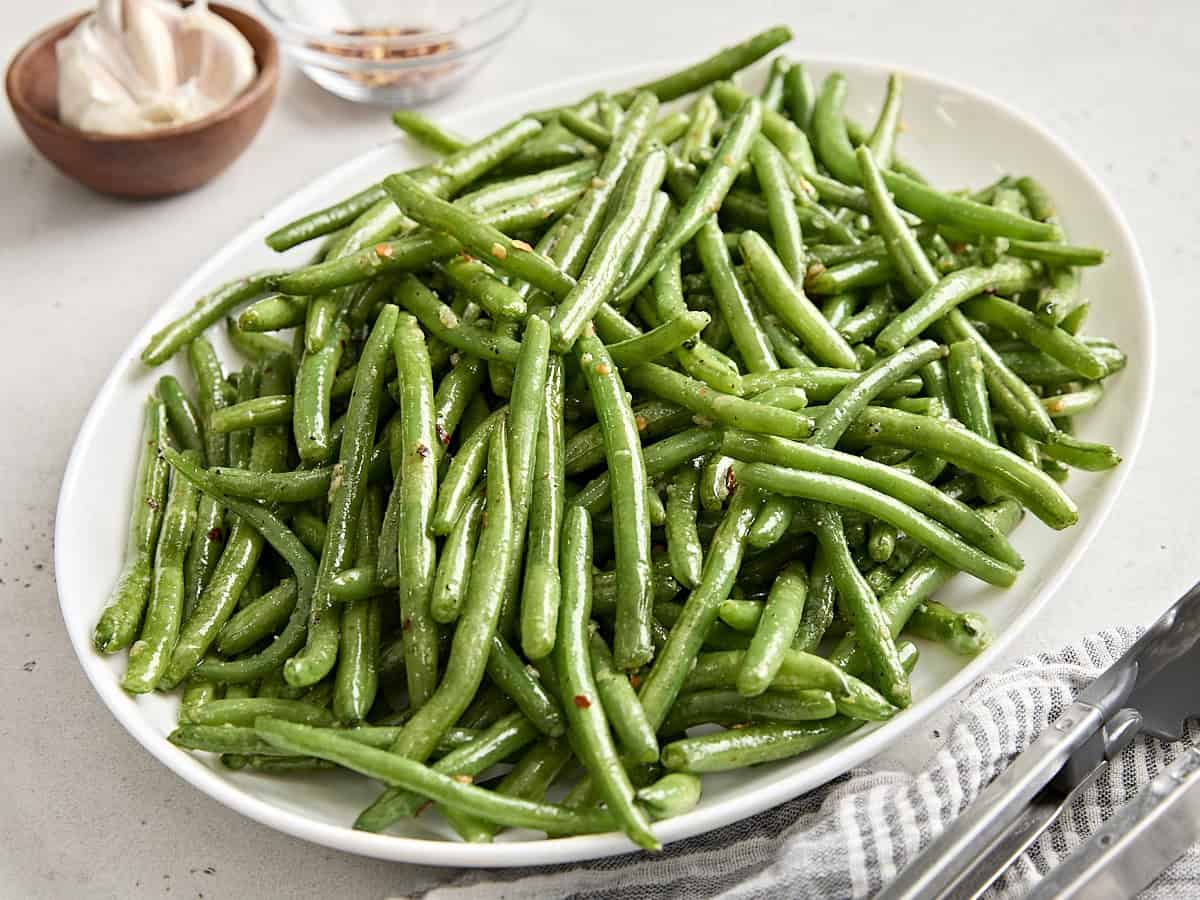
Traditional green bean casserole often relies on canned french-cut green beans and canned cream soups…a double hit of packaging markups! Instead, grab two pounds of fresh green beans from the produce section or a couple bags of frozen from the freezer section. Sauté them in a skillet with a drizzle of olive oil or domestic butter, garlic, and a pinch of other ingredients you probably already have on hand. It’s crisp, colorful, and feels like something you’d order at a nice restaurant.
Elevate the Bread Basket

Instead of spending $8 to $12 on a small wedge of imported cheese to snack on before dinner, make the bread basket your showstopper instead. Bake a quick batch of warm homemade dinner rolls or a skillet of golden cornbread, and serve it alongside whipped domestic sweet cream butter drizzled with local honey and sea salt. They cost pennies per serving, actually fill people up, and feel deeply comforting. Short on time? Don’t feel bad about grabbing a bag of ready-made dinner rolls at the grocery store like we did this time. At only $1.52 for 12 dinner rolls, I have no regrets…just extra time to spend with my family!
Prep Ahead to Keep Your Sanity

Admittedly, scratch-cooking fresh foods takes more prep than opening a row of cans with a can opener, but that doesn’t mean you need to be glued to the stove all day. Make your cranberry sauce two days in advance. Peel and chop your carrots, celery, and potatoes the day before and keep them refrigerated in water. Then on the holiday morning, you’re just assembling, roasting, and mashing, not stressing!
Christmas & Holiday Entertaining: Luxury Without the Luxury Tax
Christmas dinner and New Year’s Eve often lean toward luxury imports like Champagne, ornate cheese boards, and expensive cuts of beef and roasts. You can still create an indulgent spread without absorbing tariffs:
1. Build an American Charcuterie Board

The days of carefree grazing boards might be behind us (for now…fingers crossed!), but you don’t need imported French cheeses or Italian prosciutto to put together an impressive board. The U.S. produces excellent artisanal cheeses! While we navigate this timeline with import taxes kicking us while we’re down, try a sharp, aged Wisconsin white cheddar, a log of creamy Vermont goat cheese, or an Oregon blue cheese instead. Pair your American-made cheeses with domestic cured salami, crisp sliced apples, local honey, and candied Georgia pecans. It looks gorgeous, takes no time at all, supports local dairies, and dodges hefty markups.
2. Pour West Coast Bubbles or Switch to a Festive Mocktail
If your holiday tradition calls for a celebratory toast, you might need to leave the French Champagne and Italian Prosecco behind. Luckily, California, Oregon, and Washington state produce exceptional sparkling wines at a fraction of the cost of imported bottles, giving you festive bubbles without paying international shipping and tariff penalties! If alcohol isn’t in your budget, period, swap it out and save yourself a bunch of money by making a festive mocktail instead!
3. The Real Math: Why We Retired Our Holiday Pot Roast
At Budget Bytes, we don’t typically build holiday recipes around $70 rib roasts, but a cozy beef chuck roast used to be one of our favorite reasonably-priced celebratory centerpieces. Historically, our absolute max to keep a recipe accessible on the site is staying under $3.50 per serving.
So, when we ran the numbers on our classic pot roast between 2024 and 2026 at Walmart, the math was eye-opening:
- 2024 Beef Pot Roast (8 Servings): A 2.61 lb chuck roast ran $17.33. Combined with basic vegetables, bouillon, and seasonings, the whole pot cost $25.86, or $3.23 per serving.
- 2026 Beef Pot Roast (8 Servings): That exact same 2.61 lb cut of chuck roast at the same store jumped to $25.02—a 44% increase on the beef alone. Factoring in slight cost increases on the rest of the ingredients, the meal totaled $33.95, or $4.24 per serving.
A 44% jump pushes an everyday pot roast right out of budget territory. Save our pot roast recipe for later, but we’re pivoting for the holidays this year.
It’s All About the Bird!
Domestic turkeys are waiting for you at the grocery store right now at drool-worthy prices because they are raised, processed, and distributed entirely within the United States. While beef prices climbed, we found a whole turkey that easily feeds 7 to 9 people for just $13.11. (I also found another 11.72-pound turkey a few days later for $9.84! Today, I found a frozen whole turkey, 13.55 lbs, for $11.52! That’s a pretty good deal at 85 cents per pound.)
If you’re hosting a smaller gathering, a 5.5 lb bone-in turkey breast came out to $16.33. But from a budget perspective, the whole bird is easily the better value, giving you more than double the meat at a fraction of the price per pound. If your oven can’t fit a giant bird, you can always spatchcock your turkey to lay it flat, opt for an even cheaper roasted chicken, or go for the turkey breast-only option. Otherwise, go for the full bird and enjoy the leftovers if you have the oven space! (And if you ARE tackling a whole turkey this year, keep an eye out for our ultimate guide to the best Thanksgiving turkey, which is coming soon! It’ll have everything you need to know to get it just right.)

Pro Tip: Roasting a whole bird or a bone-in breast alongside cheap root vegetables like carrots, onions, and potatoes allows the vegetables to caramelize in the flavorful pan drippings, creating your main dish and side dishes all in one pan. After dinner, simmer the roasted bones with water and vegetable scraps to make rich broth, then turn the leftovers into a comforting turkey noodle soup (recipe also coming soon!) or a creamy turkey pot pie later in the week.
The Complete ~$45 Holiday Feast
Here is a full, holiday dinner menu built around fresh, American-grown staples and domestic supply chains. It comfortably feeds a family gathering of 8 for $45.72 total (calculated with Tennessee’s 4% grocery tax):

The Menu:
- Roast whole turkey with herb butter (you could even brine it, too!)
- Classic fluffy mashed potatoes (3 lbs)
- Savory vegetable stuffing
- Fresh sautéed garlic green beans (Double batch)
- Easy roasted carrots (Double batch)
- 3-ingredient cranberry sauce
- Classic turkey gravy
- Store-bought bakery pumpkin or fruit pie
- Soft warm dinner rolls
The Grocery Cart Breakdown:
- Whole domestic turkey: $11.52
- Russet potatoes (3 lb bag): $2.47
- Sweet cream butter (1 lb): $3.06
- Whole milk (64 oz): $2.32
- Fresh celery (1 bunch): $2.04
- Fresh French loaf/bakery bread: $1.47
- Yellow onion (1 large): $0.97
- Fresh garlic (1 bulb): $0.72
- Fresh green beans (2 lbs): $3.63
- Fresh whole carrots (4 lbs): $4.77
- Fresh cranberries (12 oz bag): $2.99*
- Fresh navel orange (1): $0.98
- Bakery pre-made pie: $4.94
- Pre-made dinner rolls: $1.00
Total: $42.88
Note: *When we photographed our menu on 10/22/26, Great Value brand fresh cranberries were not available at Walmart yet, so we picked up a bag from Kroger, which was significantly more expensive. I manually added the cranberries from the 2nd grocery stop (and the 4% sales tax) to our total. But now that fresh cranberries are available at Walmart for just $0.76 a bag (as I saw on 10/26/26), you should be able to bring your total down even more by buying them there instead!

Pantry Staples Used:
Salt, black pepper, flour, granulated sugar, vegetable broth, and dried baking spices (dried thyme, rosemary, sage, and parsley).

Why This Strategy Works
This menu works because it centers on staple proteins and produce, featuring domestically raised turkey alongside hearty crops like potatoes, carrots, onions, garlic, and cranberries. The U.S. produces massive quantities of these staples locally, so their prices aren’t tied to shipping containers, port disputes, or trade friction. The rising cost of gas and diesel does affect domestic products (and our plans to travel for the holidays!), but we’re doing the best we can.
By buying raw or frozen, domestically grown produce and relying on basic American dairy and pantry seasonings, you avoid the packaging tariffs hitting canned goods and the trade surcharges driving up imported meats and luxury items. You don’t have to sacrifice flavor, tradition, or hospitality to survive this season’s grocery landscape; you just have to shop with a plan.
To our friends outside the U.S.A.: While this breakdown is tailored to U.S. supply chains, the exact same principle applies where you are. Leaning into your domestically grown root crops, greenhouse produce, and domestic staples is your best defense against punishing import markups and currency exchange rates.
Sources:
- USDA Economic Research Service (ERS) – Cattle & Beef Market Outlook (Beef inventory and market pricing trends)
- Consumer Brands Association (CBA) – Tinplate Steel Tariffs Impact Report (Canned food and metal packaging duties)
- Office of the United States Trade Representative (USTR) – Enforcement & Tariff Actions (Import duties on European cheeses, wine, and confections)
- USDA Economic Research Service (ERS) – Turkey Sector Background & Statistics (Domestic poultry production and supply chains)
- USDA Foreign Agricultural Service (FAS) – Dairy Tariff-Rate Quotas (Import regulations on foreign butter and specialty dairy)
More Budget-Saving Resources



The post The Holiday Tariff Trap: How to Host a Crowd Without Breaking the Bank appeared first on Budget Bytes.
from Budget Bytes https://ift.tt/j0hsPnz
via IFTTT