My sister, Meghan, is known as the Bread Queen in our family. When I decided to make these Parker House Rolls, I knew I had to impress her as she reigns over all things buttery and delicious. I’m happy to report that not only did she approve, but she went back for seconds (and maybe thirds). While this recipe might seem intimidating, it’s more about patience than difficulty. The dough just needs a little time to rest and rise…twice. With only a few simple ingredients, a generous yield, and a built-in arm workout, these rolls are as rewarding as they are comforting.
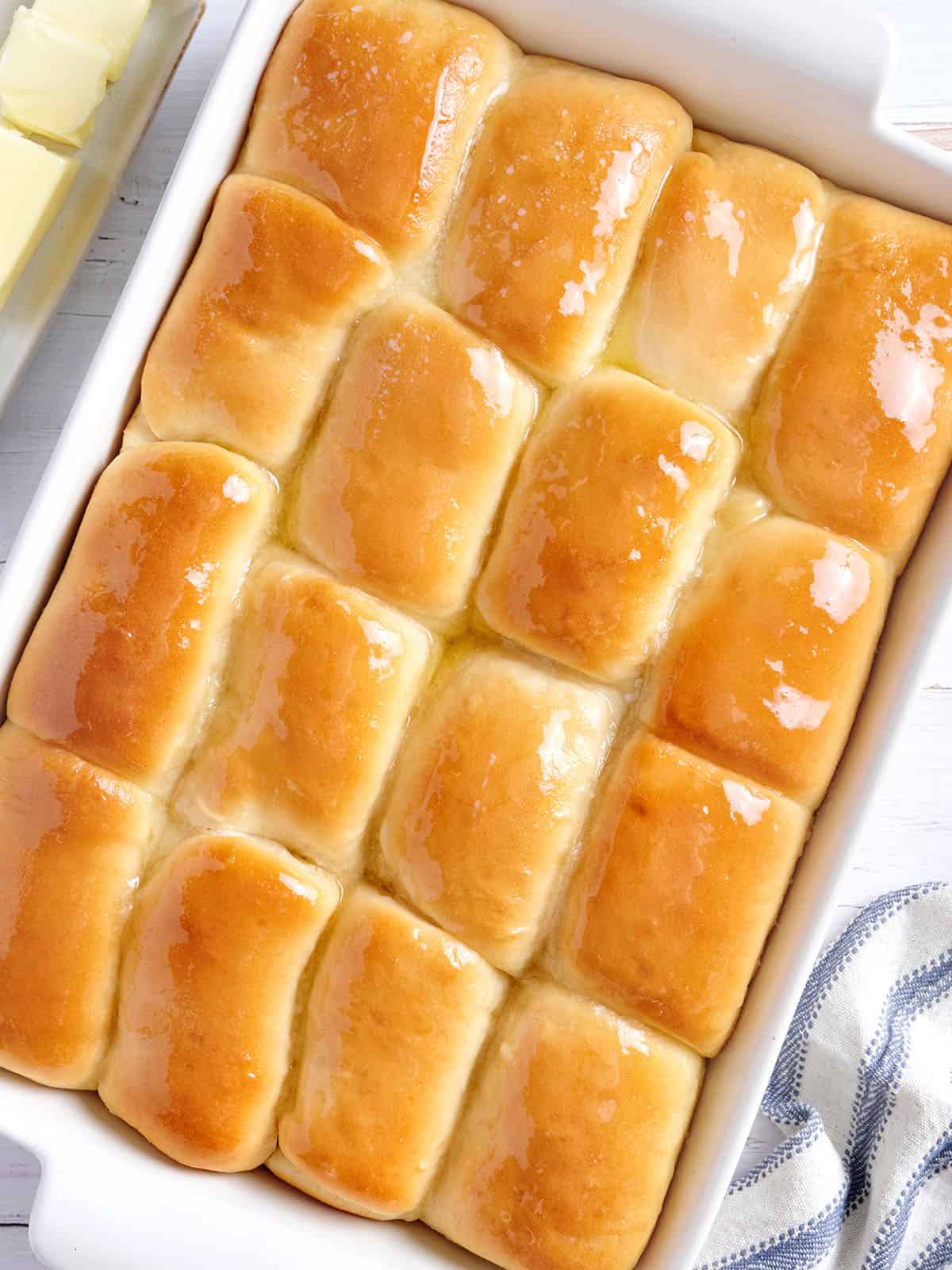
Easy Parker house rolls Recipe
Invented at the Parker House Hotel in Boston during the 1870s, it seems as though the story of how these rolls were created has a variety of theories; however, what we do know is that the folded dough was brushed with butter, giving us the quintessential soft, buttery rolls we’ve come to know and love.
Regardless of how they were developed, I must admit they are a bit of a process to prepare. I start by blooming the yeast in warm water and sugar, then add the wet ingredients and slowly mix in the flour until I’ve achieved the perfect dough, which is soft, smooth, and just a bit tacky. After a good knead and the first rise, I cut, roll, brush with butter, fold, cut again, and let them rise a second time before baking them to golden perfection. One final brush of melted butter seals the deal. These Parker House Rolls may seem like a labor of love, but according to the Bread Queen herself, they’re absolutely worth every bite.
Recipe Success Tips
- Weigh the ingredients. This provides the best consistency and accuracy.
- Make sure the water and milk are warmed to 105°F-110°F. The best way to check is with a thermometer. If you do not have one, it’s about the warmth you should be washing your hands at. If it is too hot, it may kill the yeast. I used warm water right out of the tap.
- Dust your hands with flour. While you knead the dough, if it becomes too sticky, dust your hands with a touch of flour. Though be careful, as adding too much flour can result in dense, dry rolls.
- Knead the dough for 10 minutes if you do it by hand. If you have a stand mixer, you can knead with a dough hook for at least 5 minutes.
- Cutting and folding are necessary. It may seem excessive, but it gives the Parker House Rolls their distinctive pocket, so they’re easy to open.
Parker House Rolls
Equipment
-
9×13'' Casserole Dish
-
Small Bowl
-
Small Saucepan or Measuring Cup I warmed the milk and butter in the microwave with a measuring cup.
-
Large Bowl
-
Rolling Pin
Ingredients
- nonstick spray $0.02
- ¼ cup sugar divided (2oz., 50g) $0.10
- 1 Tbsp active dry yeast $0.83
- ¼ cup warm water warmed to 105°F-110°F, $0.00
- 1 cup milk (8oz.) warmed to 105°F-110°F, $0.22
- 1 stick unsalted butter divided, $0.92
- 4½ cups flour 675g, plus dusting, $0.75
- 1 tsp salt $0.04
- 2 eggs $0.32
Instructions
-
Gather and prepare all ingredients. Spray your 9×13 dish with nonstick spray.
-
In a small bowl, add ⅛ cup (2 Tbsp) sugar, the active dry yeast, and warm water. Let it sit for at least 5 minutes to bloom. It should become foamy.
-
While the yeast is blooming, in a small saucepan over medium-low heat, warm the milk and 4 Tbsp of butter until just melted. You can do this step in the microwave on 30-second intervals, too. Make sure the milk doesn’t boil, and let it cool if it’s too hot.
-
In a large bowl, mix ½ cup flour, salt, and the remaining sugar.
-
Add the milk mixture, yeast, and eggs, and combine with a rubber spatula until smooth.
-
Now, add the flour, ½ cup at a time, combining each addition. You can use a whisk to help combine until it becomes too thick. When you add the last ½ cup of flour, use your hands to combine.
-
Once all the flour is added to the bowl, move the dough ball to the counter. It’s ok if there is loose flour. As you knead, it will be incorporated. Knead with your hands for 10 minutes until smooth and elastic. If the dough becomes too sticky, flour your hands lightly and continue kneading.
-
Spray the large bowl with nonstick spray and place the kneaded dough ball into the bowl. Cover with plastic wrap and let it rise for 90 minutes, or until it has doubled in size.*
-
Once the dough has risen, transfer it to a lightly floured surface. Divide the dough in half. Using a rolling pin, roll each half into a rectangle that is ½-inch thick, about 8×11 inches.
-
Melt the remaining 4 Tbsp butter. Brush the rectangles lightly with half the butter. Cut again in half, lengthwise. You will have 4 rectangles now.
-
Fold the dough in half, lengthwise, leaving ½-inch unfolded, so the ends don’t meet. Cut each rectangle into 4 even pieces, resulting in 16 rolls.
-
Turn the rolls over and place them in the greased dish. Cover the dish in plastic wrap and let the dough rise again for another hour. Preheat the oven to 350°F during this time.
-
Once the oven is heated and the dough has risen again, place it in the oven and bake for 25 minutes.
-
Once golden brown, remove them from the oven and brush with the remaining 2 tbsp butter, then enjoy.
See how we calculate recipe costs here.
Notes
Nutrition
how to make parker house rolls step-by-step photos
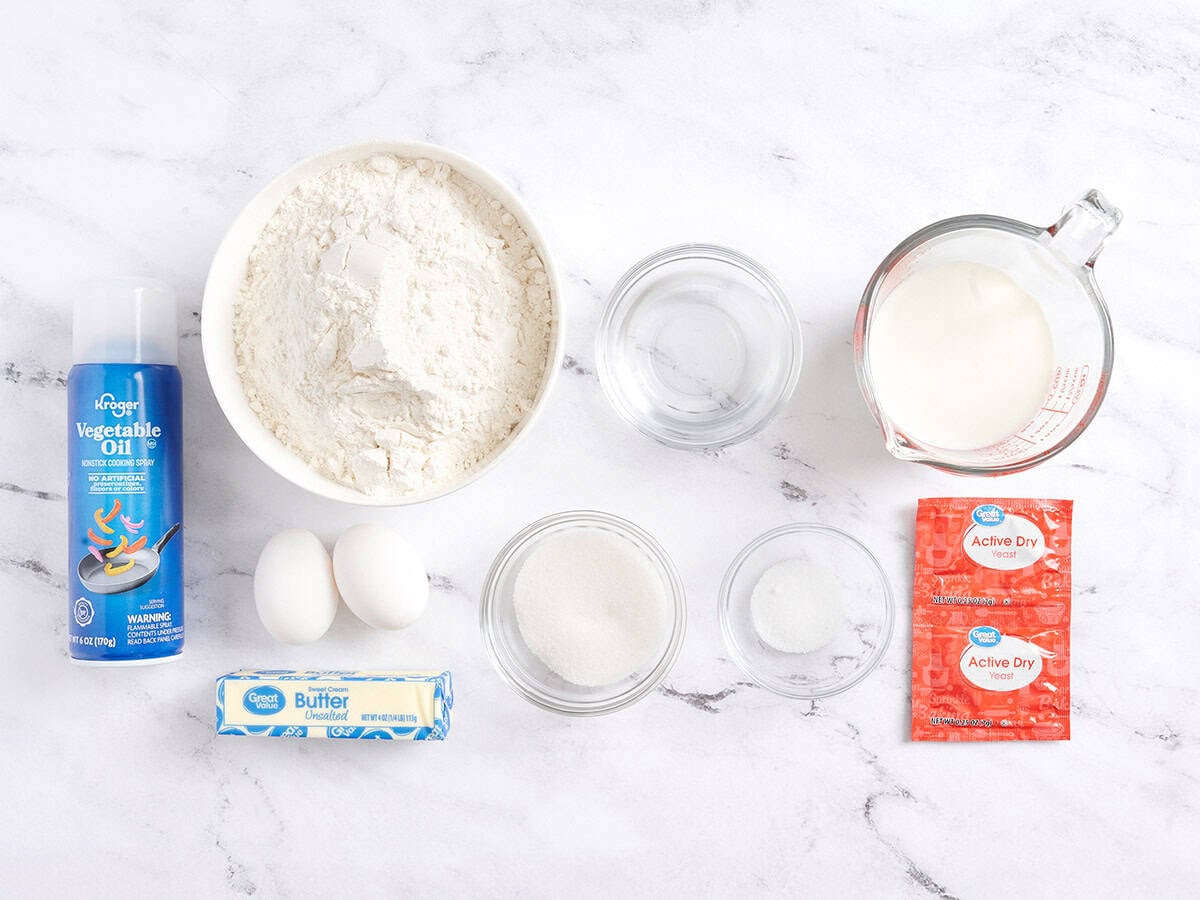
Gather and prepare all ingredients. Spray your 9×13 dish with nonstick spray.
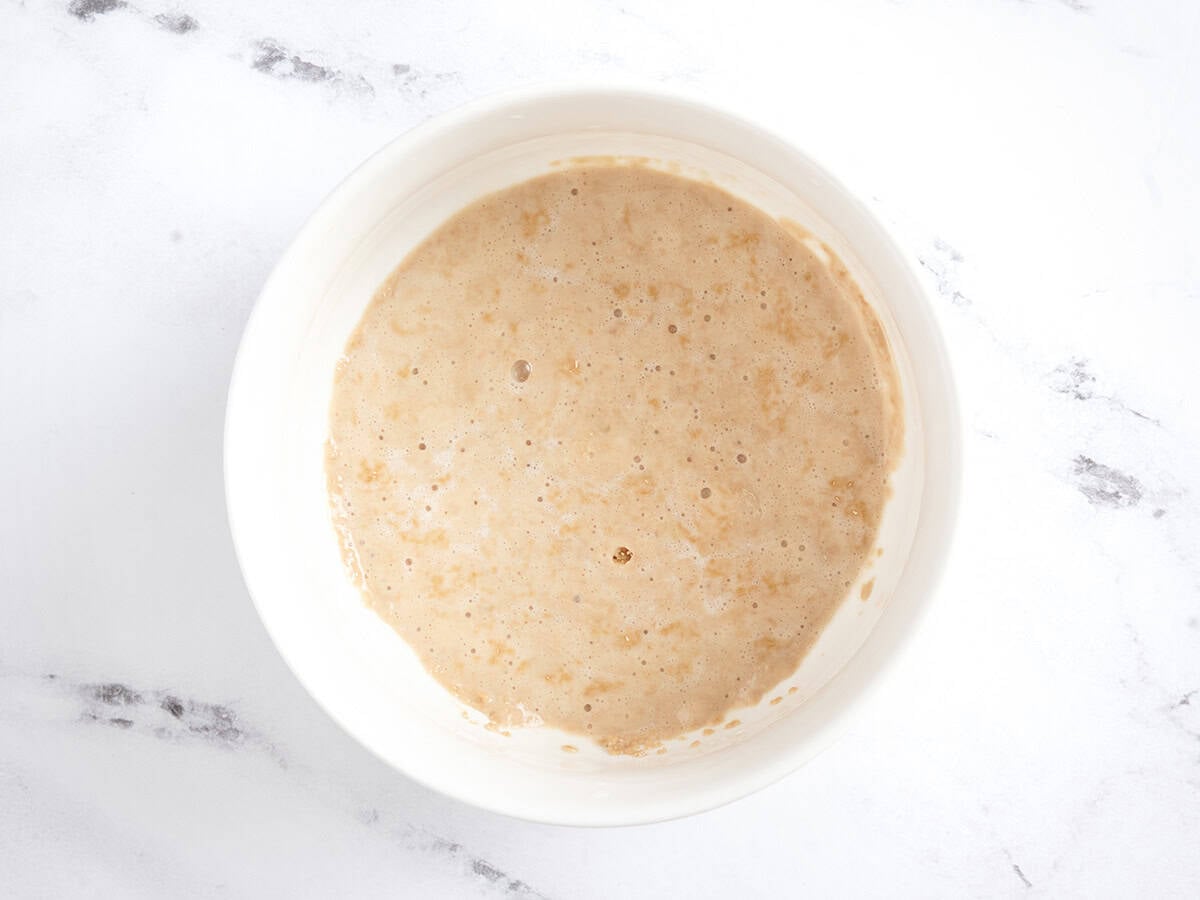
Activate the yeast: Place 2 Tbsp sugar, 1 Tbsp active dry yeast, and ¼ cup warm water in a small bowl and let it sit for about 5 minutes until the yeast blooms. The mixture will become foamy when this happens. If it doesn’t get foamy or bubbly, the yeast is likely dead, and you want to start with a fresh pack.
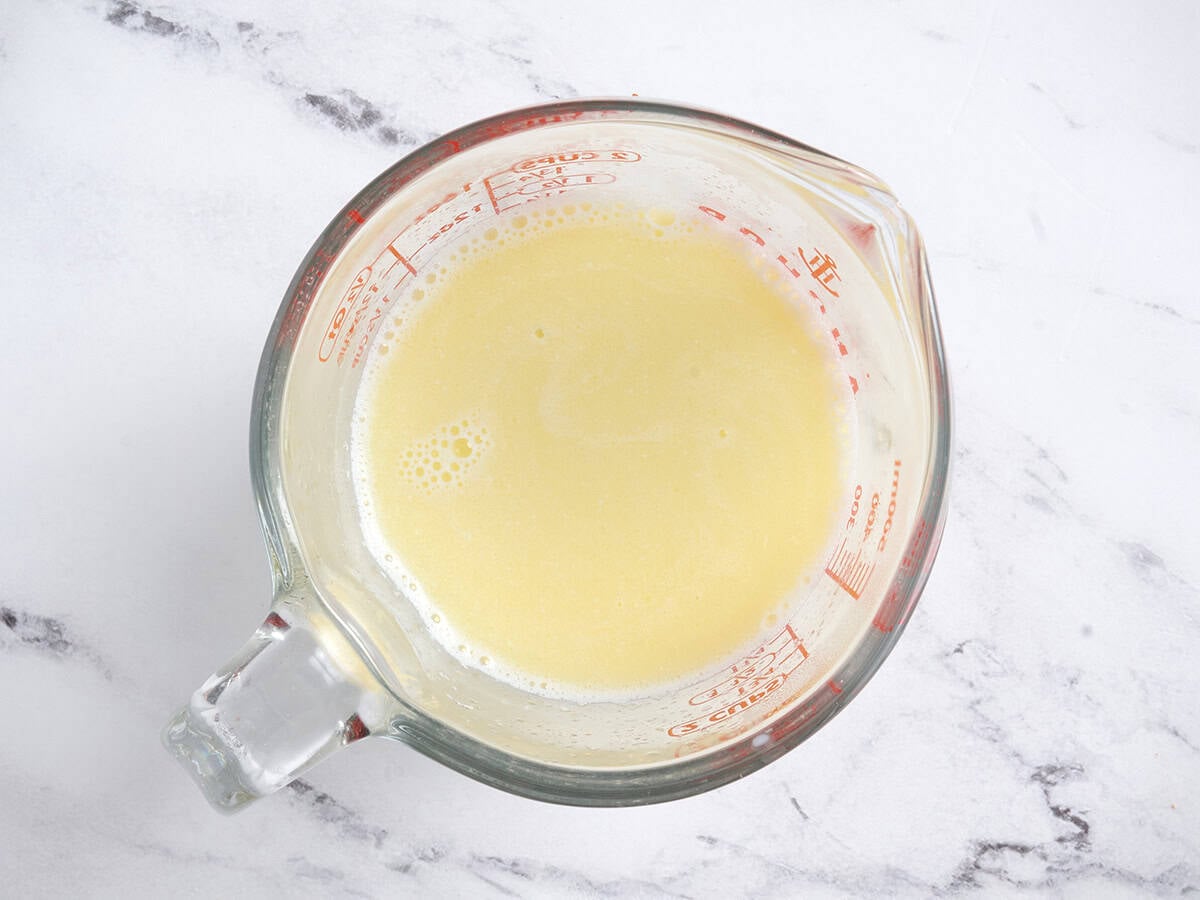
Warm the milk: While you wait for the yeast to bloom, warm 1 cup milk and 4 Tbsp butter over medium-low heat, until the butter is just melted. I like to do this in the microwave, warming the mixture in 30-second intervals. Make sure the milk doesn’t boil. Let it cool if it’s too hot.
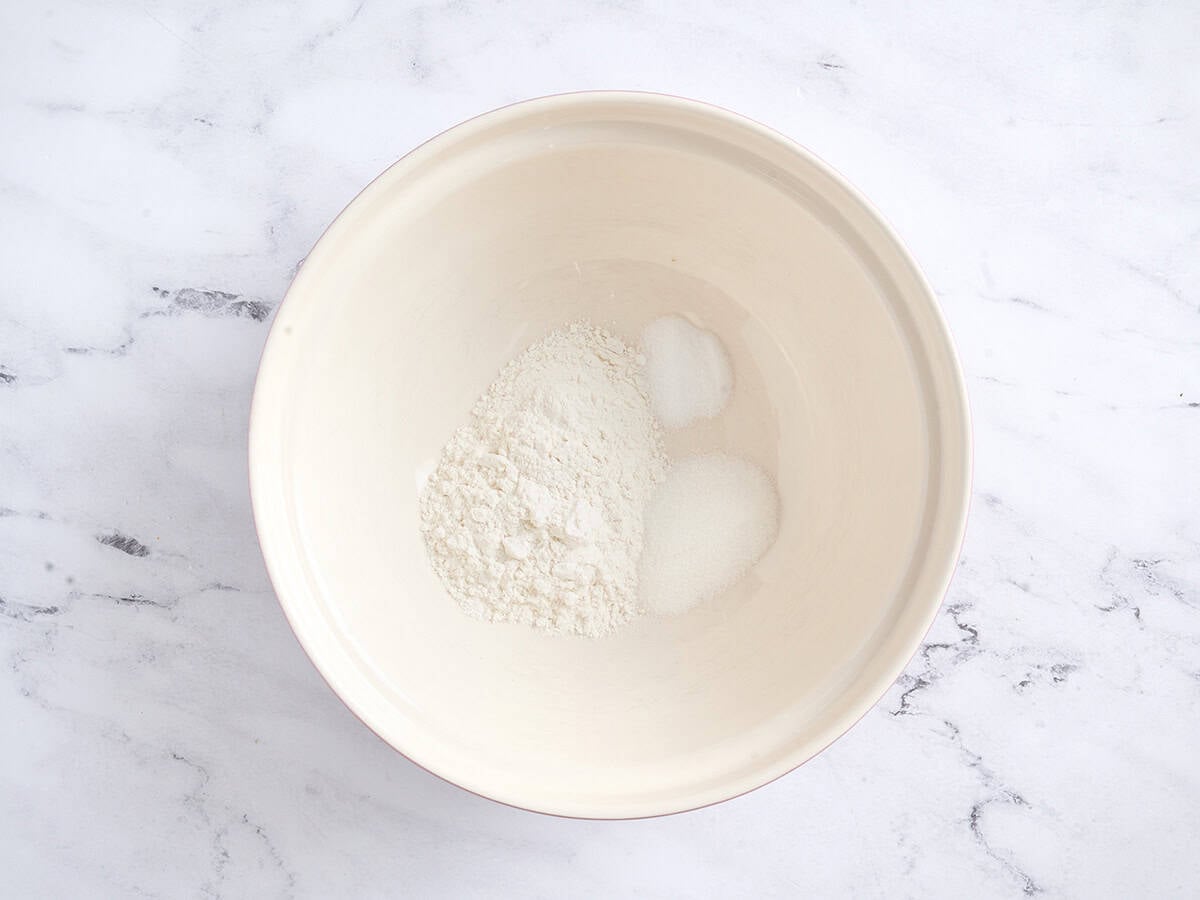
Combine the dry ingredients: In a large bowl, mix ½ cup flour, salt, and the remaining sugar.
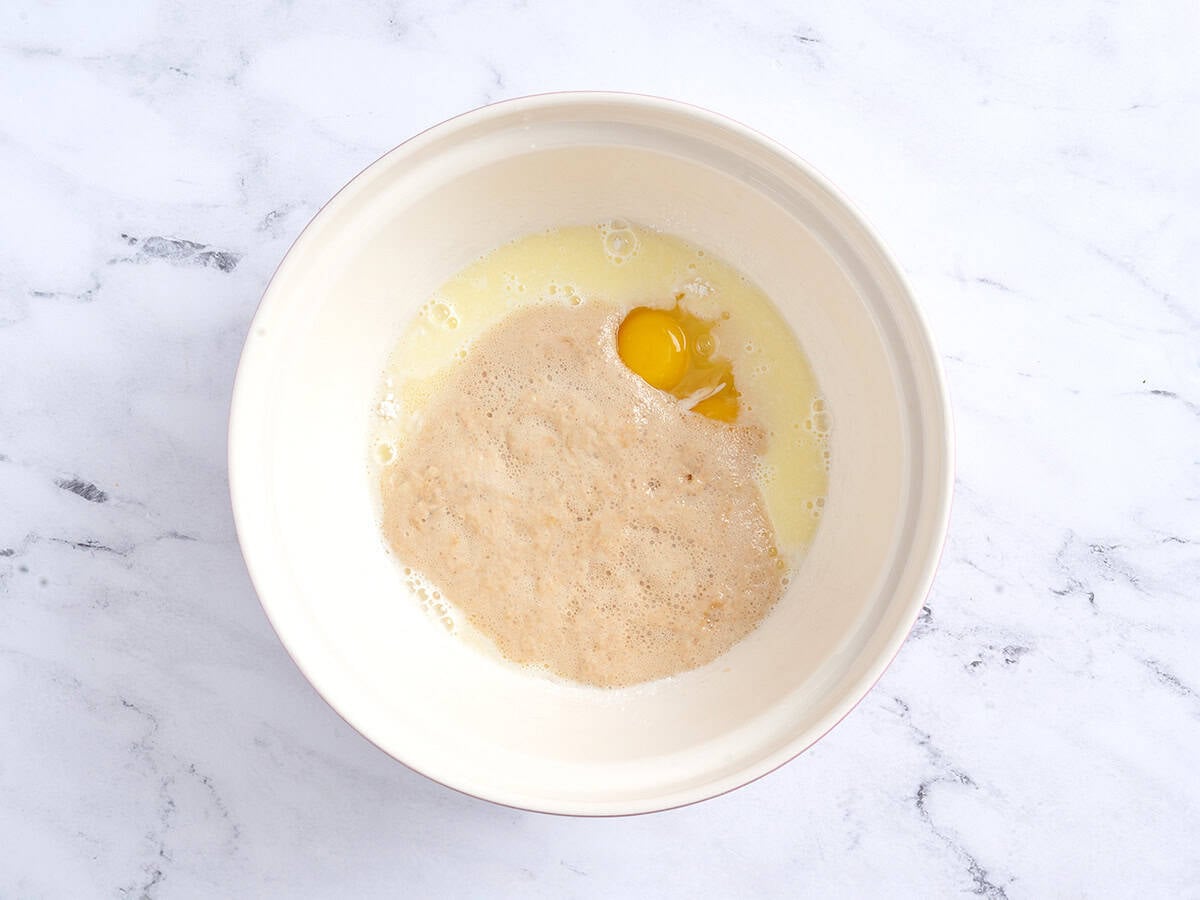
Combine wet and dry ingredients: Add the milk mixture, yeast mixture, and 2 eggs, and combine with a rubber spatula until smooth.
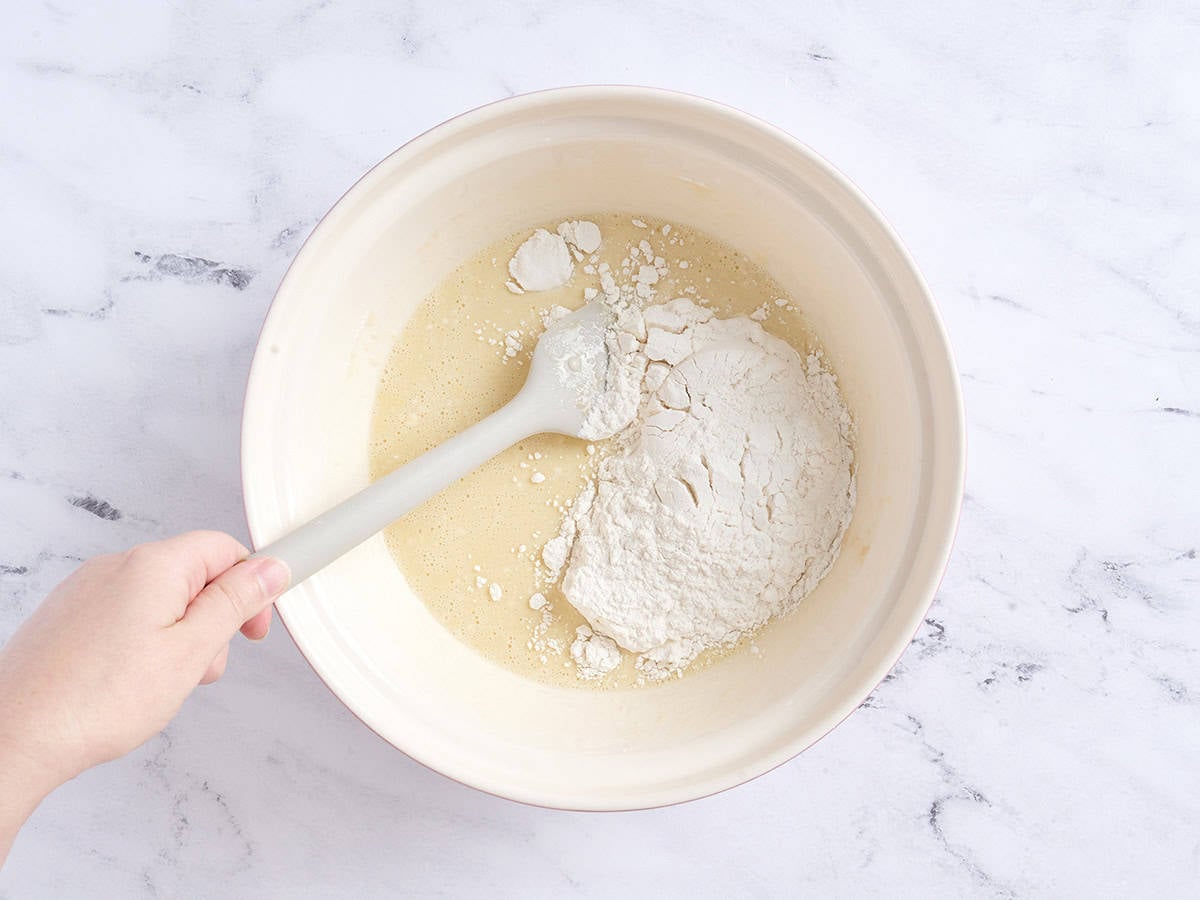
Mix in the flour: Add the flour, ½ cup at a time, combining after each addition. You can use a whisk until it becomes too thick. When I add the last ½ cup of flour, I like to use my hands to combine it all. I alternated between a spatula and a whisk when adding and mixing the flour, depending on the condition. Then I moved to using my hands with the last addition of flour.
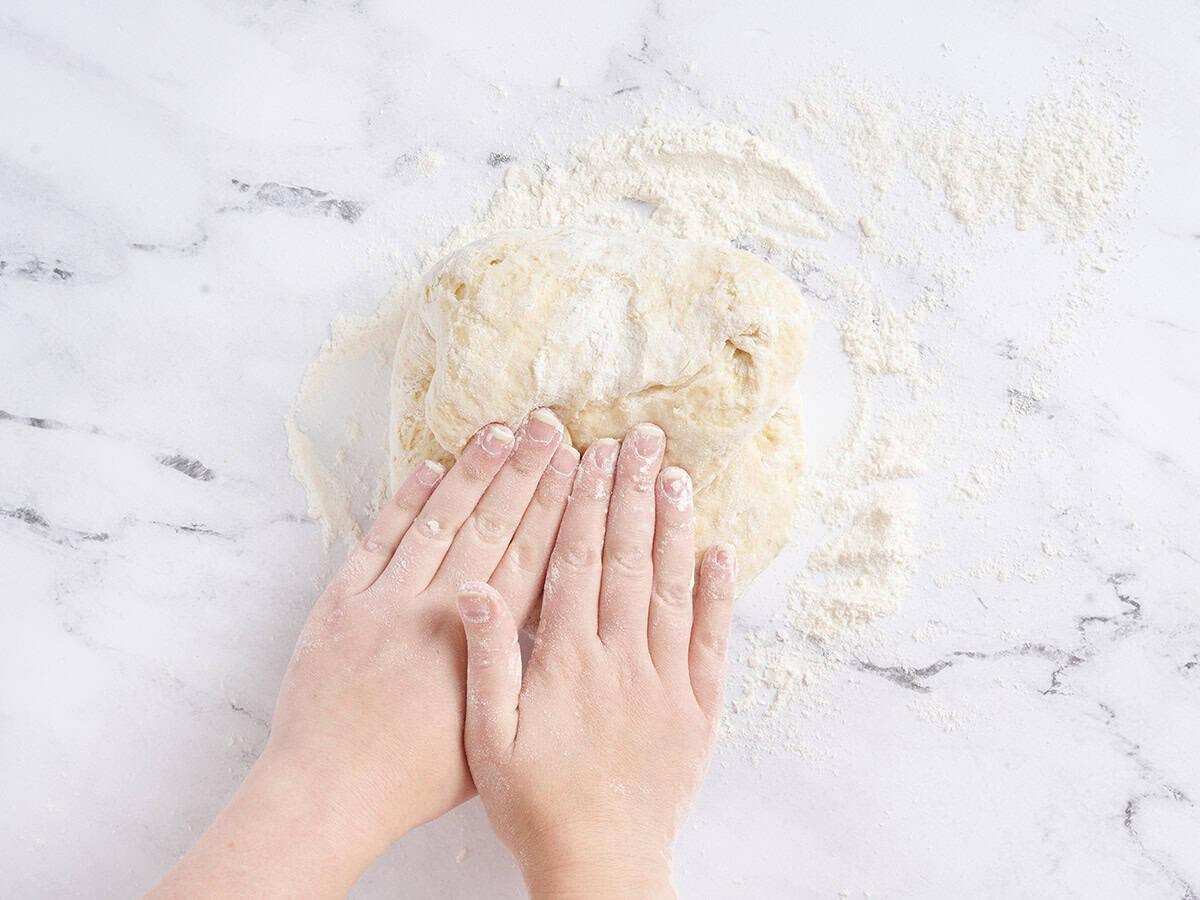
Knead the dough: Once all the flour is added, transfer the dough ball to the counter. Don’t worry if there is loose flour. As you knead, it will be incorporated. If kneading by hand, knead for 10 minutes until smooth and elastic. If the dough becomes too sticky, flour your hands lightly and continue kneading. The dough should be smooth, soft, slightly tacky, but not wet or excessively sticky.
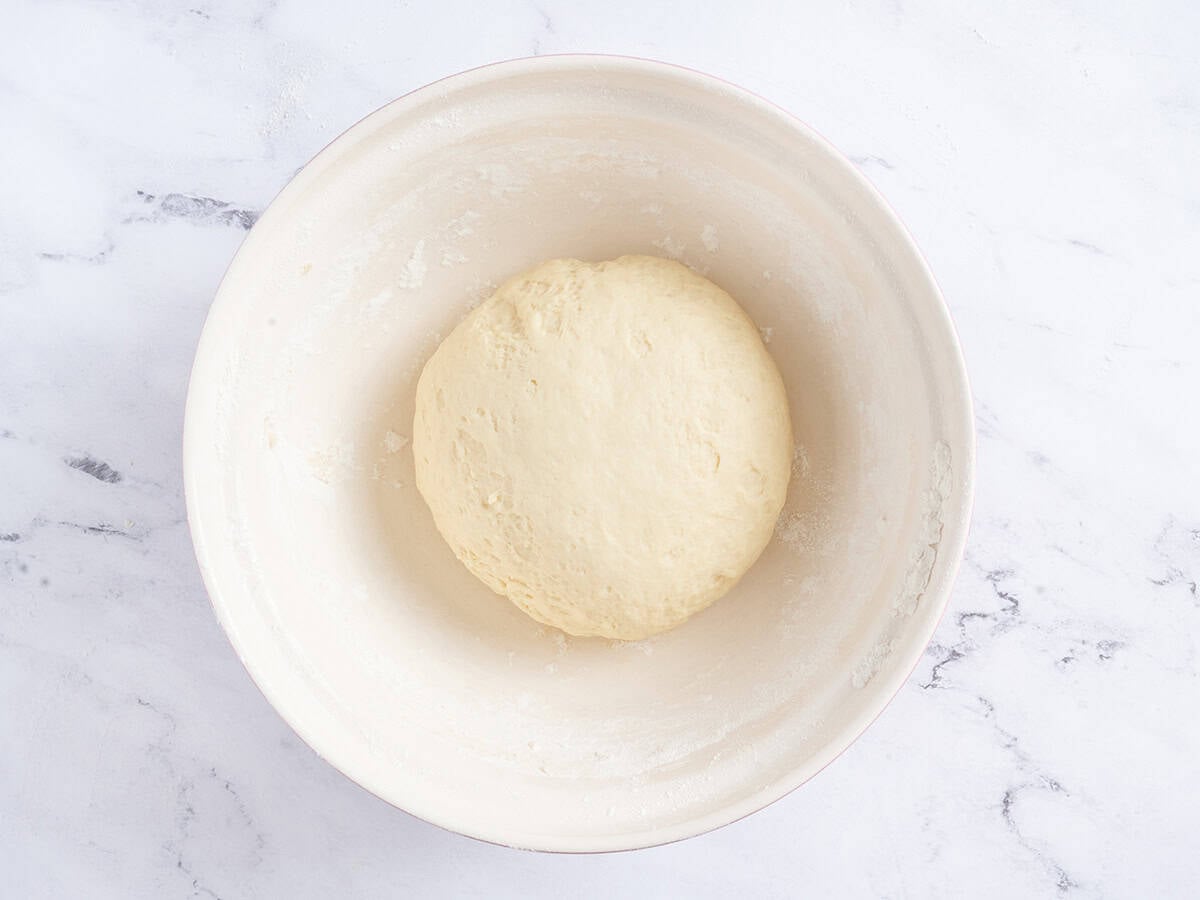
Let the dough rise: Spray a large bowl with nonstick spray and place the kneaded dough ball into the bowl. Cover the bowl with plastic wrap and let the dough rise for 90 minutes, or until it has doubled in size. Depending on the conditions in your kitchen, it could take more or less time for the dough to double in size.
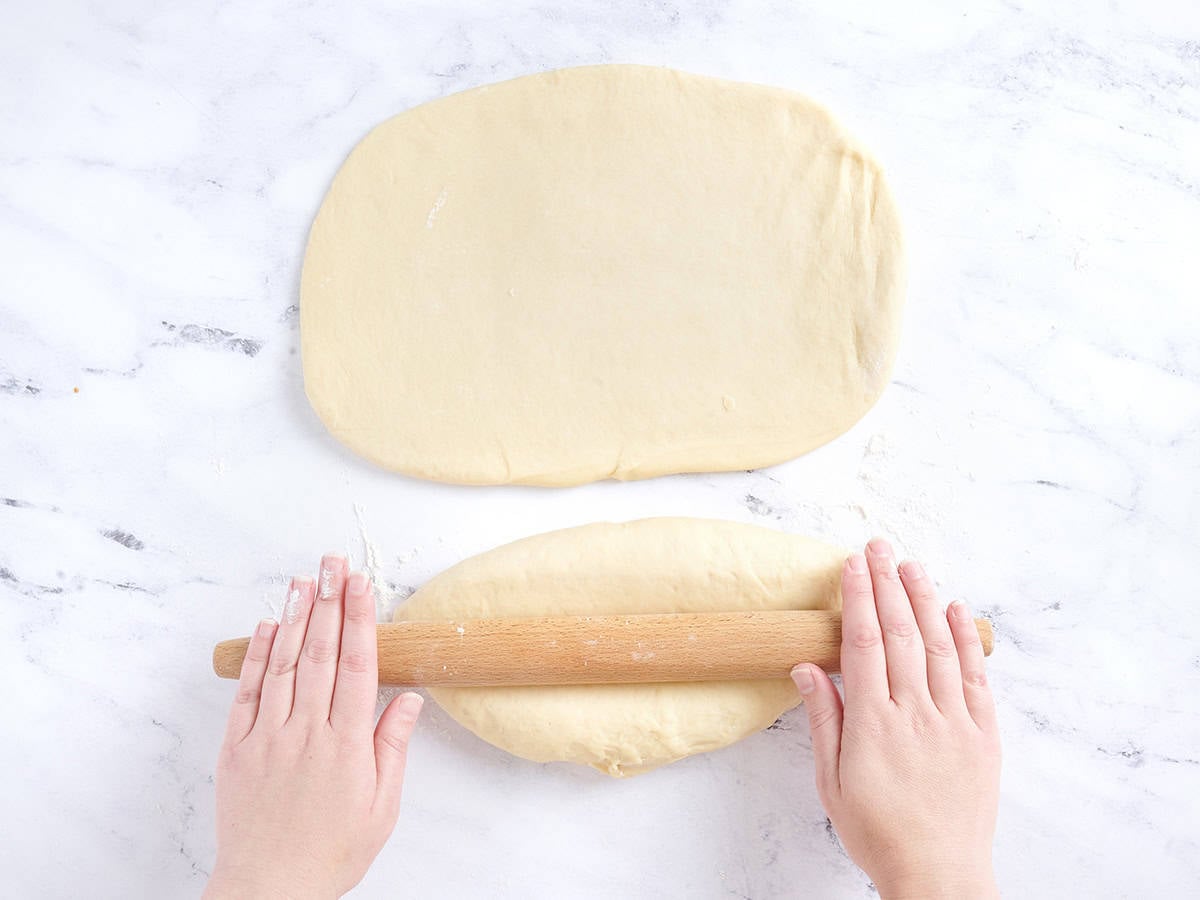
Roll out the dough: Once the dough has risen, transfer it to a lightly floured surface and divide it in half. Using a rolling pin, roll each half into a rectangle that is ½-inch thick, about 8×11 inches.
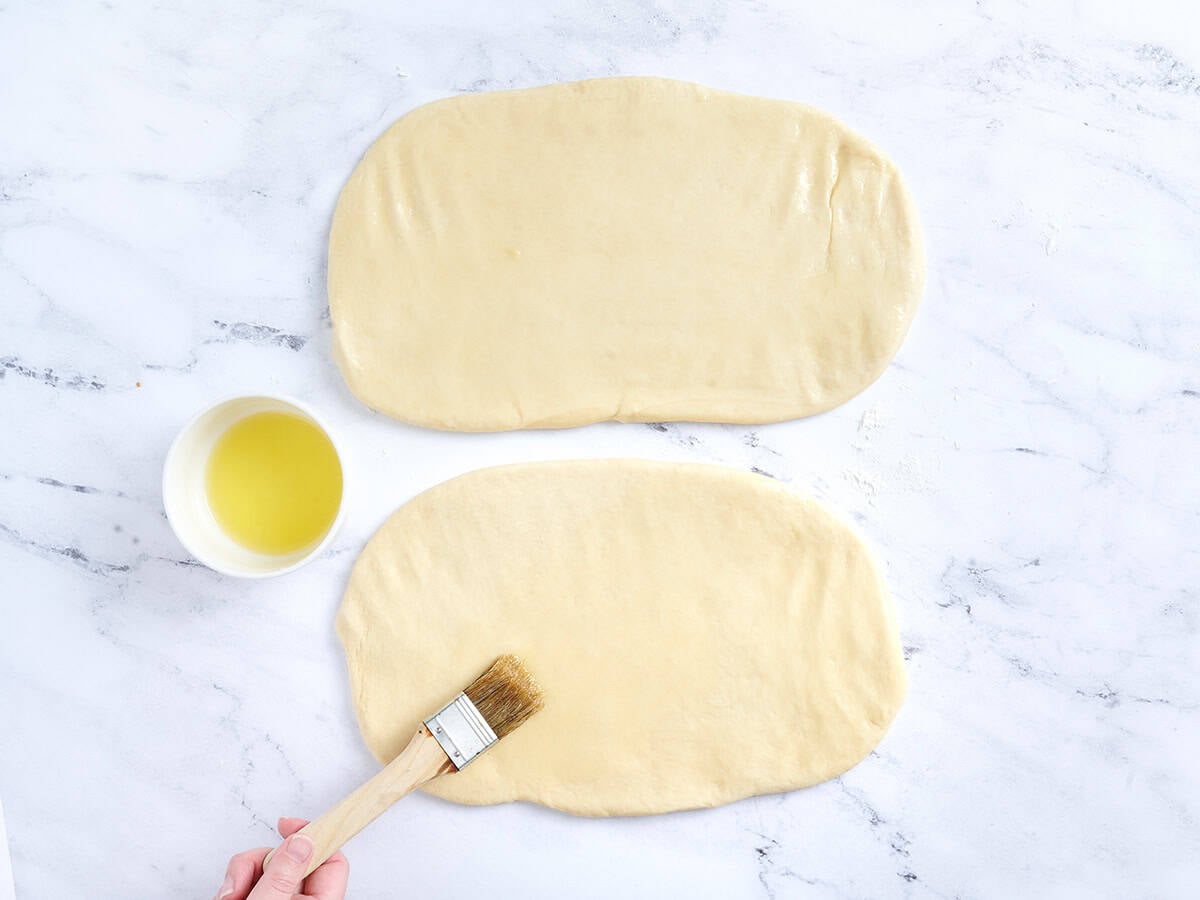
Brush the dough: Melt the remaining 4 Tbsp butter and brush the rectangles lightly with half of it. This creates the signature butter flavor and helps the layer separate after they’re cooked. Cut again in half, lengthwise. You will have 4 rectangles now.
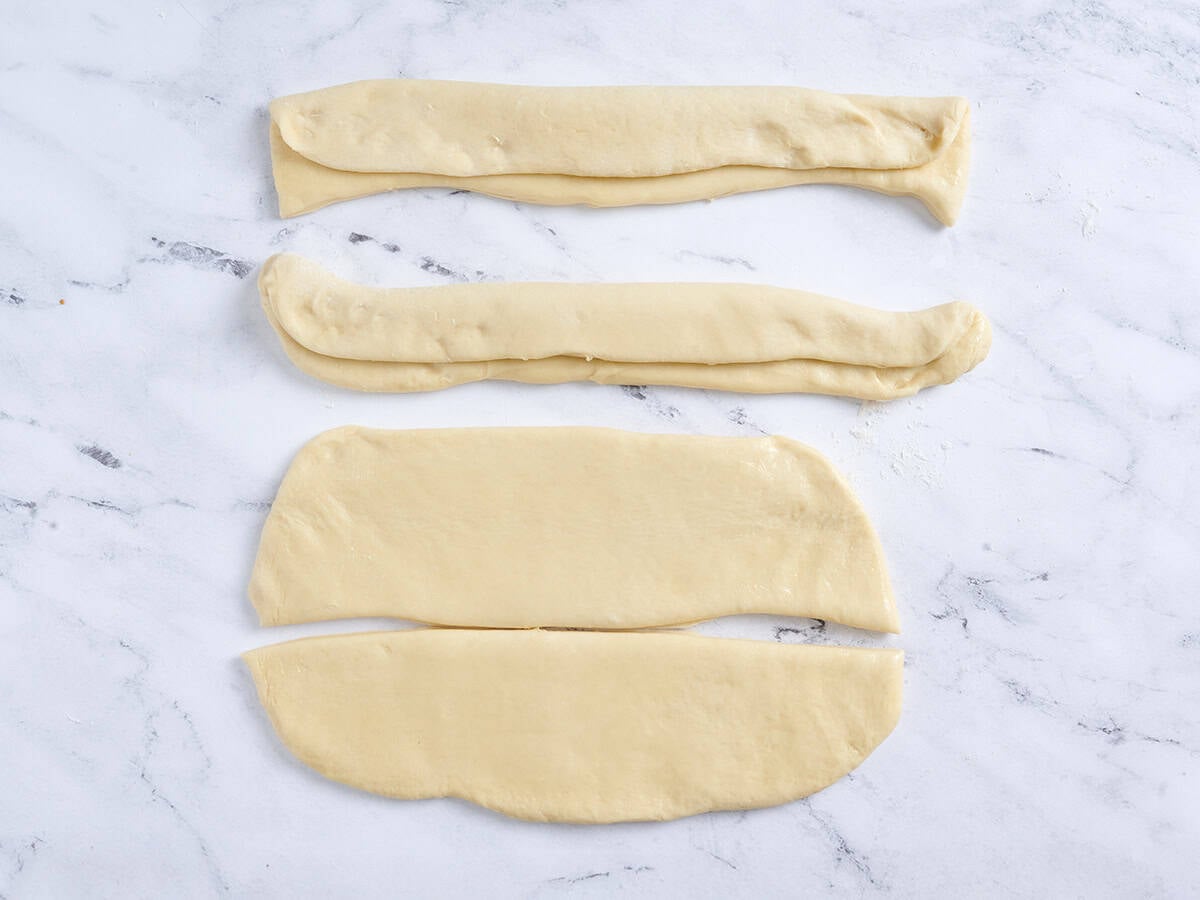
Cut the dough: Fold the dough in half, lengthwise, leaving ½-inch unfolded, so the ends don’t meet.
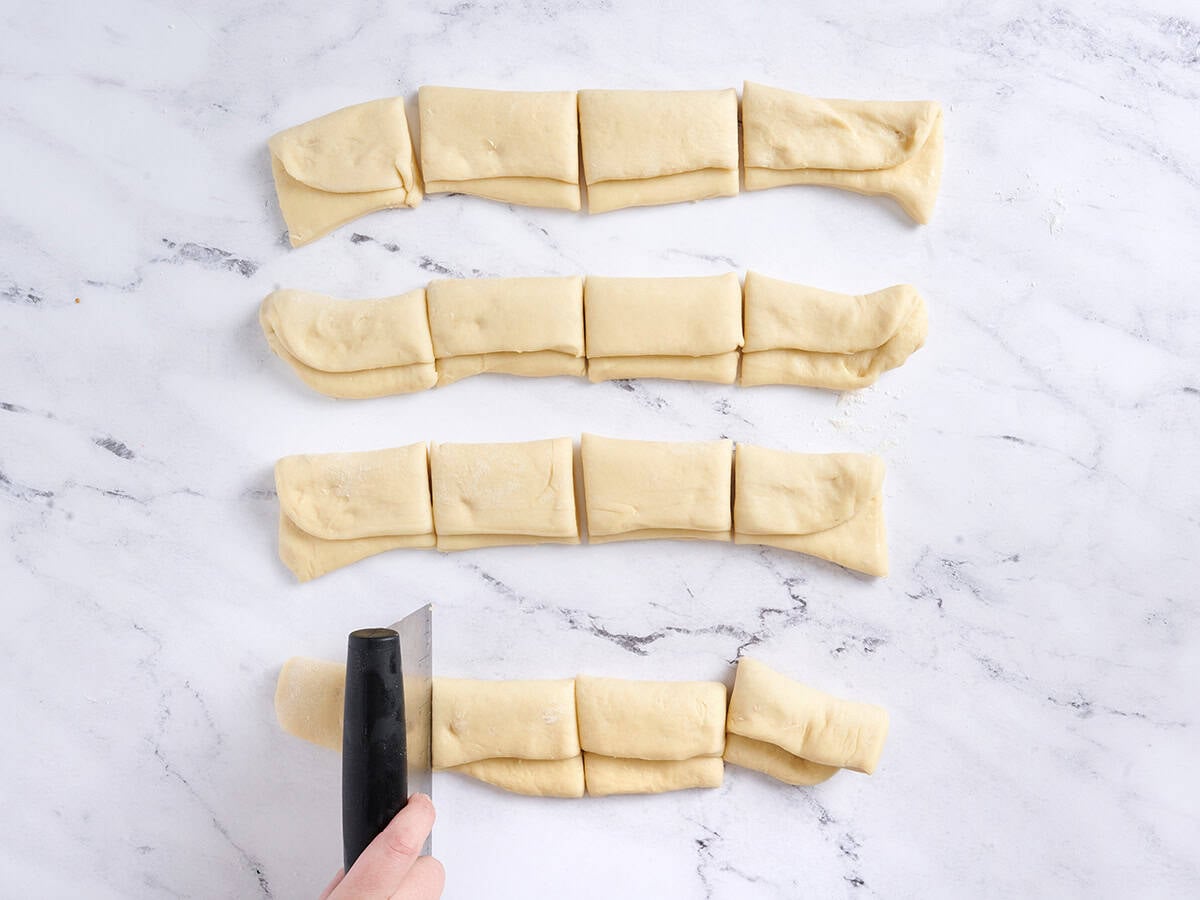
Cut each rectangle into 4 even pieces, so you now have 16 rolls.
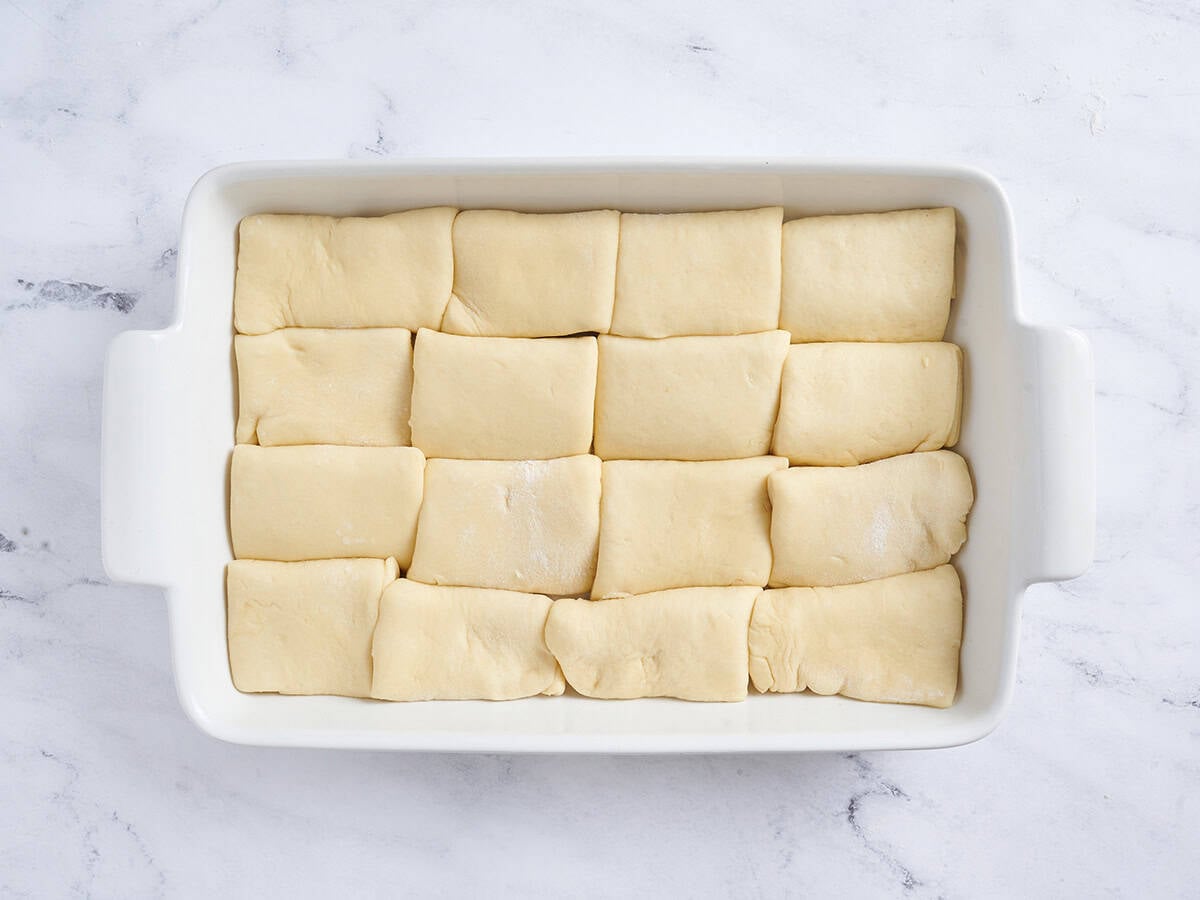
Let the dough rise: Place the cut rolls in a greased baking dish with the folded side down. The rolls can be close together, so they puff up against each other. Cover the dish with plastic wrap and let the dough rise again for 1 hour. Preheat the oven to 350°F while the dough rises.
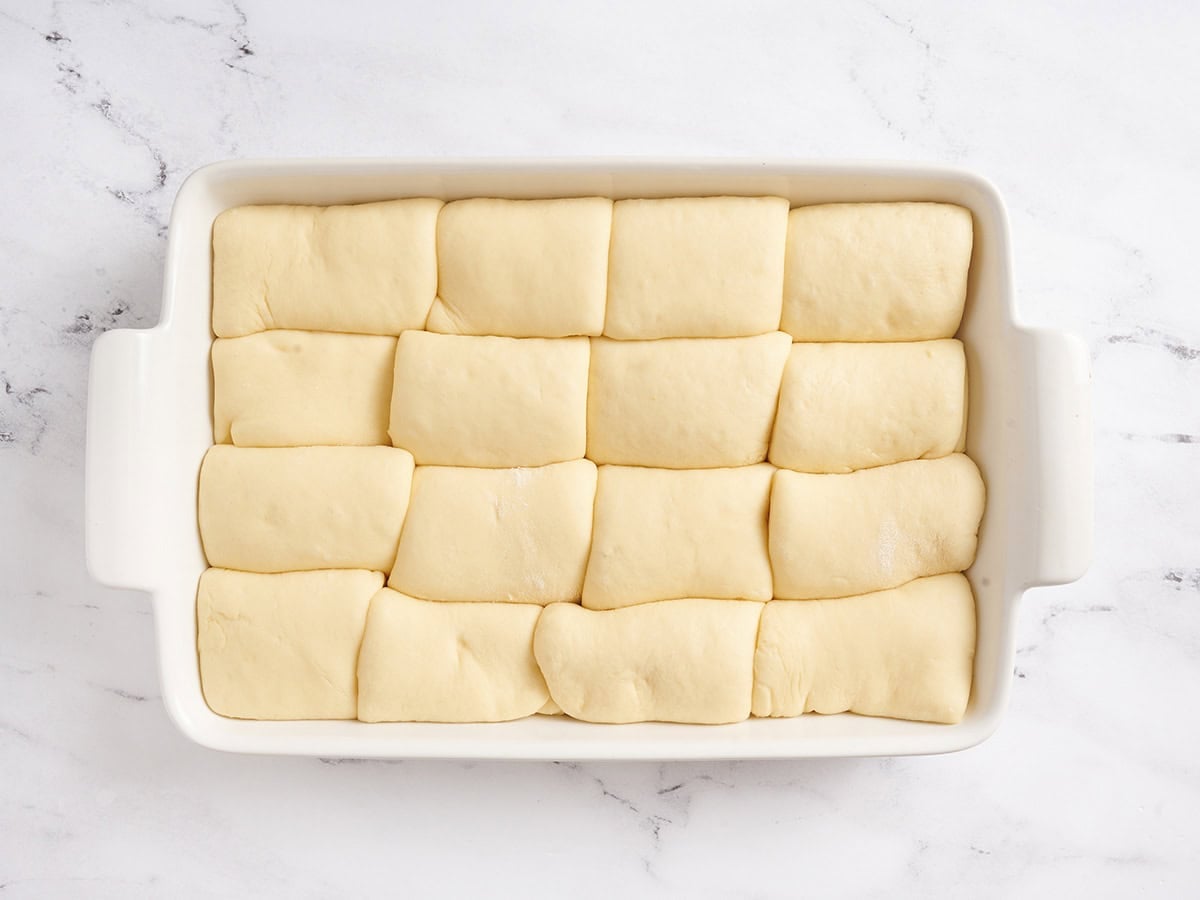
Bake: Once the oven is heated and the dough has risen again, place it in the oven and bake for 25 minutes.
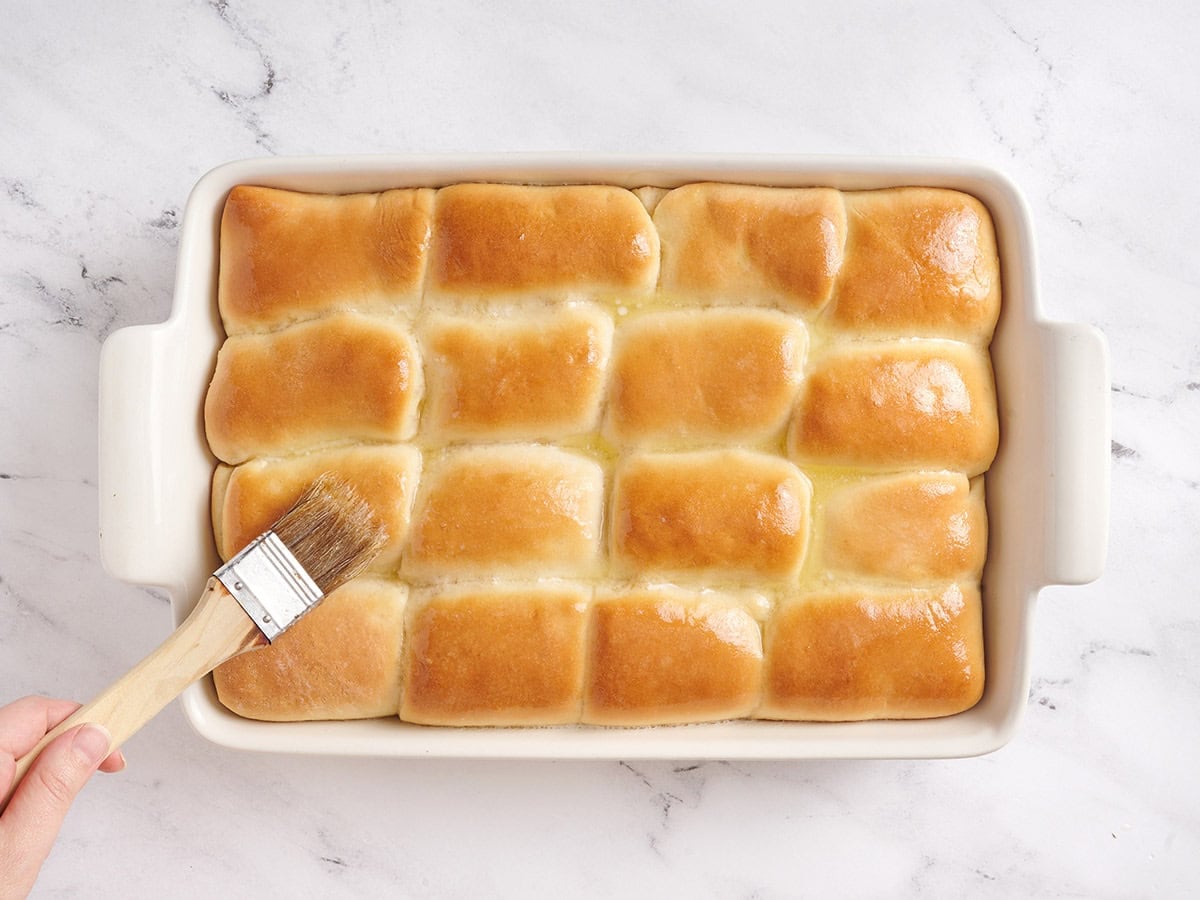
Butter and serve: Once the rolls are golden brown, remove them from the oven and brush with the remaining 2 Tbsp butter for a glossy finish and extra richness.
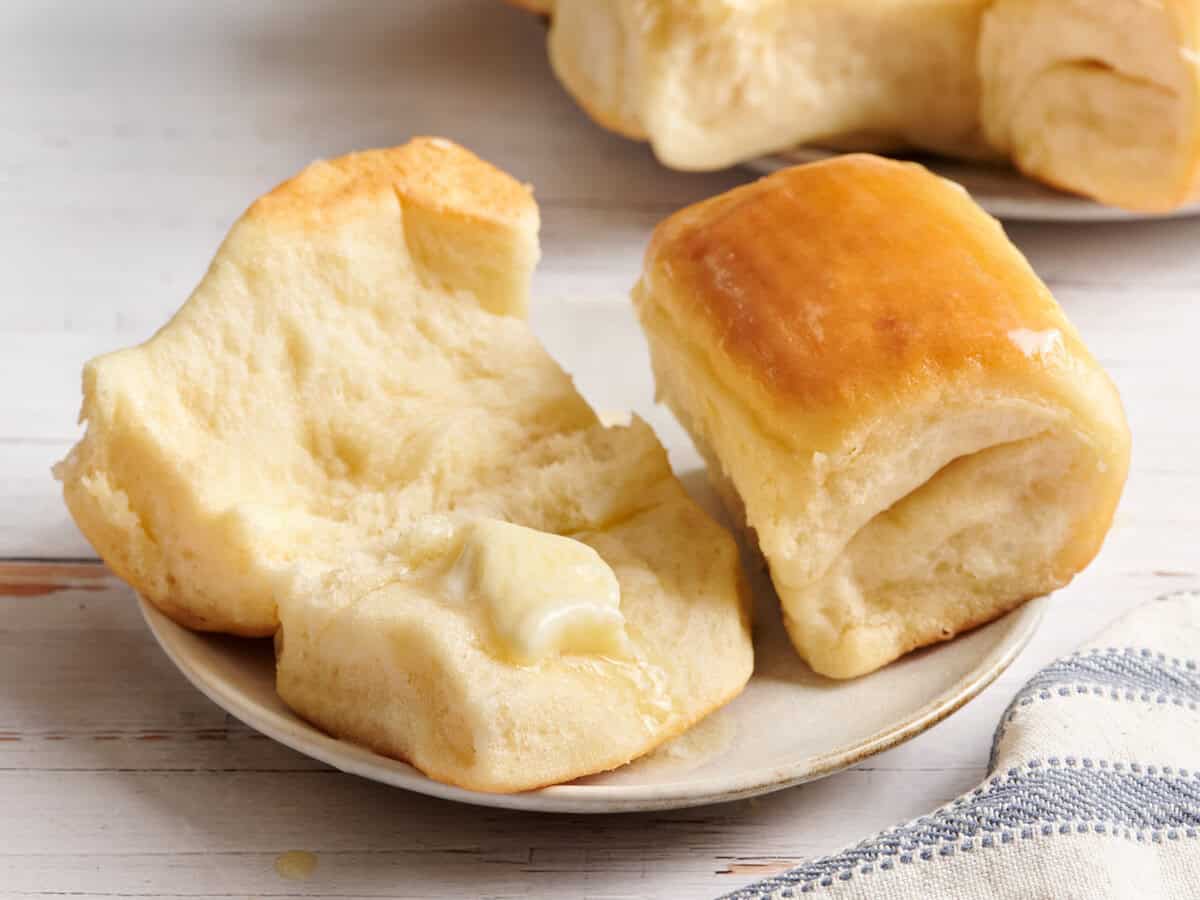
Remove from the pan and serve. Separate the rolls and serve with a pat of butter. Enjoy.
serving suggestions
Though Parker House Rolls can be enjoyed with almost any meal, I like to serve them with baked spaghetti to mop up any sauce leftover on my plate or with chicken stew to soak up all the amazing flavors. Though I do think they also pair well with delicious baked ham and would be excellent to use in turkey sliders.
Storage & Reheating
Leftovers can be stored in an airtight container in the refrigerator for 3-4 days or frozen for 3 months.
More homemade Roll Recipes
- Soft and fluffy, these Dinner Rolls are made with milk, butter, and egg, which yields a slightly sweet roll that pairs perfectly with savory foods.
- Hawaiian Rolls with buttery golden tops have the softest, most tender crumb that practically melts in my mouth.
- Easy No Knead Focaccia Rolls come together easily, but they do need some proofing time, so plan accordingly.
More Bread Recipes

The post Parker House Rolls appeared first on Budget Bytes.
from Budget Bytes https://ift.tt/wsRObtm
via IFTTT